From Bean to Bar
Chocolate Made from Scratch
Chokoholic's bean-to-bar chocolate is made from cocoa beans — not from ready-made chocolate. Every bar begins with the raw ingredient and is shaped, refined and finished entirely by hand.
What Does Bean-to-Bar Actually Mean?
Bean-to-bar chocolate means making chocolate starting from whole cocoa beans, carrying out every stage of production - cleaning, roasting, cracking, winnowing, grinding, refining, tempering and moulding - rather than beginning with couverture chocolate that has already been manufactured elsewhere. It is the difference between making food from its raw ingredient and working with a finished ingredient to create something new. Jamie Wake works in both disciplines, and at Chokoholic those two worlds sit side by side.
A chocolate maker creates chocolate from cocoa beans or other raw cocoa ingredients. A chocolatier uses finished chocolate - such as couverture - to create truffles, bonbons, filled chocolates and decorative products. Chokoholic's bean-to-bar work places Jamie firmly in the chocolate maker's discipline, requiring a different set of tools, techniques and patience. The reward of this approach is a bar that reflects every decision made along the way - from the beans chosen to the roast applied.
The Bean-to-Bar Process
Making chocolate from cocoa beans is a multi-stage process requiring patience at every step. Each stage has a direct effect on the flavour and texture of the finished bar.
1. Selecting Cocoa Beans
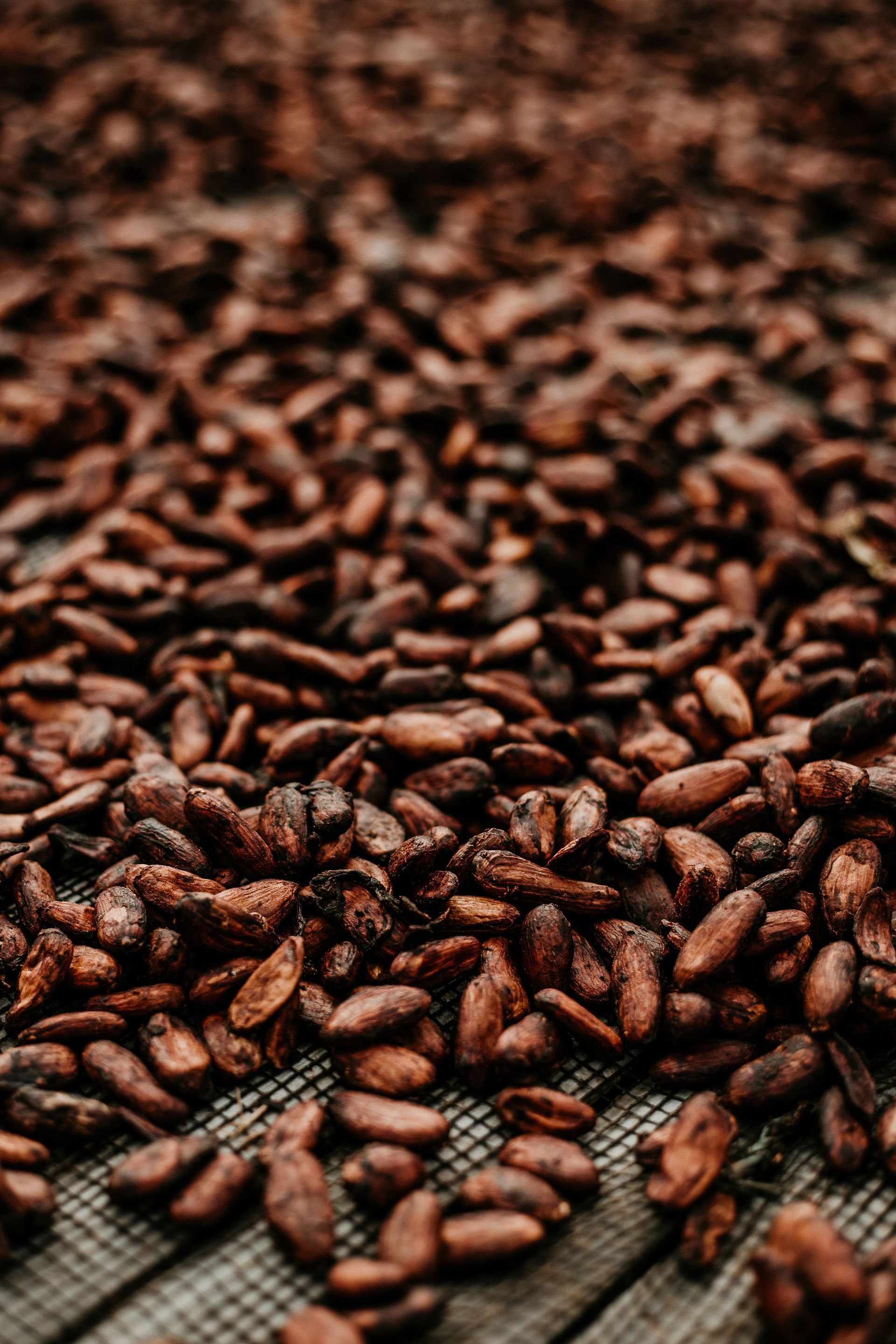
The choice of cocoa bean variety and origin shapes the flavour potential of the finished bar before any work has begun. Even before roasting, the character of the bean is already present - fruity, floral, earthy or nutty notes that are latent in the raw material, waiting to be drawn out or deepened by the process ahead. Selecting the right beans is the first and in many ways most important decision in bean-to-bar chocolate making.
2. Roasting
Roasting develops the chocolate flavour from the raw cocoa bean, driving off moisture and triggering the Maillard reaction that transforms the bean's raw bitterness into the complex flavours we recognise as chocolate. Roast level matters enormously - a lighter roast may preserve brighter, more acidic and fruity notes, while a longer, darker roast can deepen bitterness and bring out richer, more complex flavour. Finding the right roast for a particular bean is one of the most skill-dependent parts of the process.
3. Cracking and Winnowing
Once roasted, the beans are cracked open to break the outer shell away from the inner cocoa nib. Winnowing then separates the lightweight shell fragments from the heavier nibs using airflow - the shell is discarded and the pure nib is left ready for grinding. It is a simple process in principle, but removing all the husk cleanly takes care; any remaining shell affects the texture and flavour of the final chocolate.
4. Grinding the Cocoa Nibs
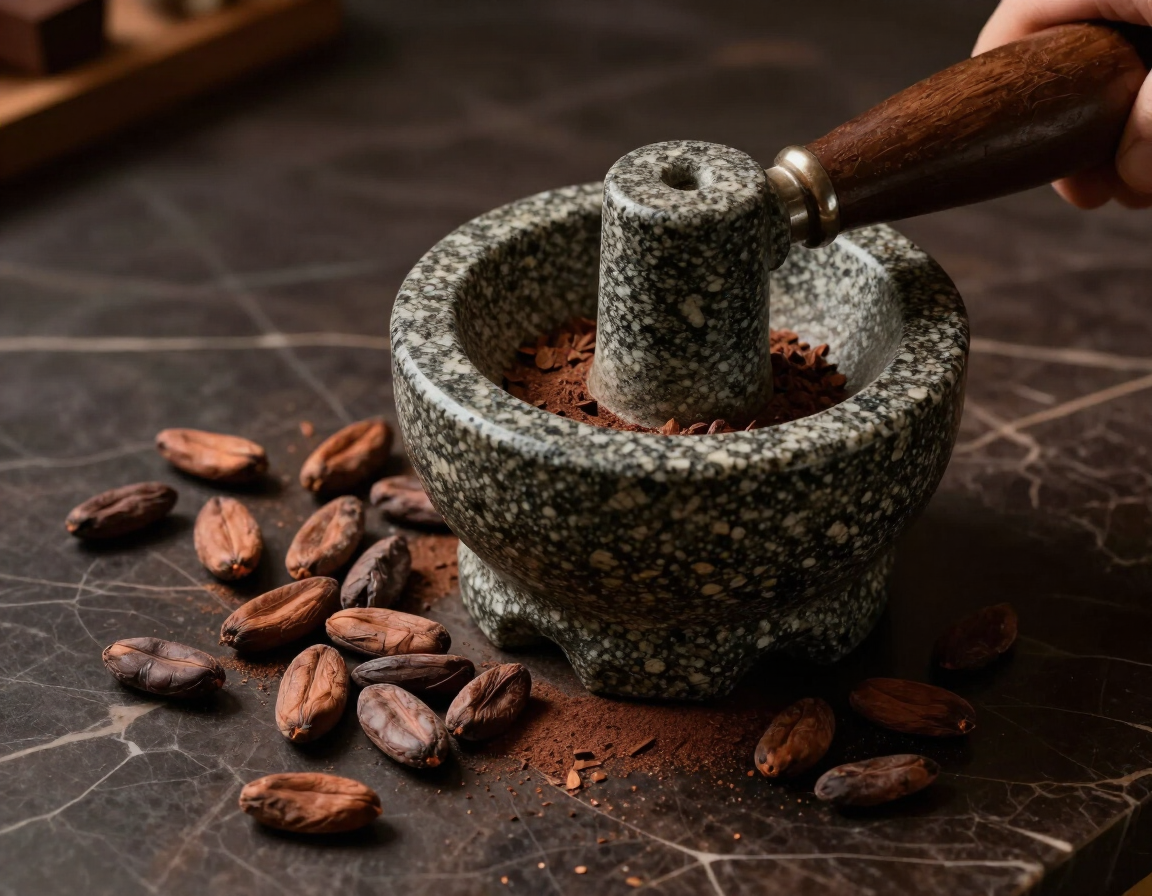
The cocoa nibs are ground to break down their cell structure and release the cocoa butter contained within. As grinding continues, the mixture moves from a coarse paste to a smoother, flowing state - the cocoa mass, sometimes called chocolate liquor. This is the raw material from which chocolate is made, and at this stage it already carries the full character of the bean and the roast.
5. Refining and Developing
Extended grinding - sometimes called conching - is where the chocolate is worked over time, developing smoothness, reducing bitterness and allowing volatile compounds that carry harsh or off flavours to escape. This stage can take many hours, and the duration has a meaningful effect on the finished chocolate. It is one of the stages that most rewards patience, and where small-batch production allows the maker to judge progress by feel, smell and taste rather than by a fixed timer.
6. Tempering
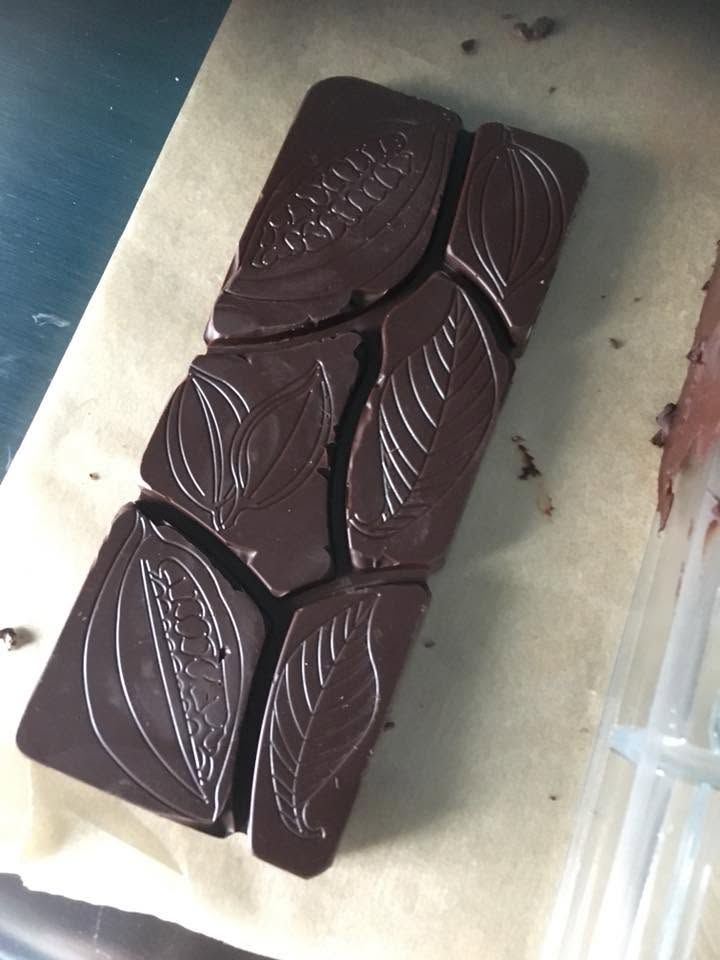
Tempering involves carefully raising and lowering the temperature of the melted chocolate so that the cocoa butter crystallises into the correct stable form. Properly tempered chocolate has a clean snap when broken, a glossy surface and a smooth, even melt in the mouth. Poorly tempered chocolate blooms - the cocoa butter separates and the bar develops a dull, streaky surface. It is a process that requires close attention to temperature and timing, and it cannot be hurried.
7. Moulding into Bars
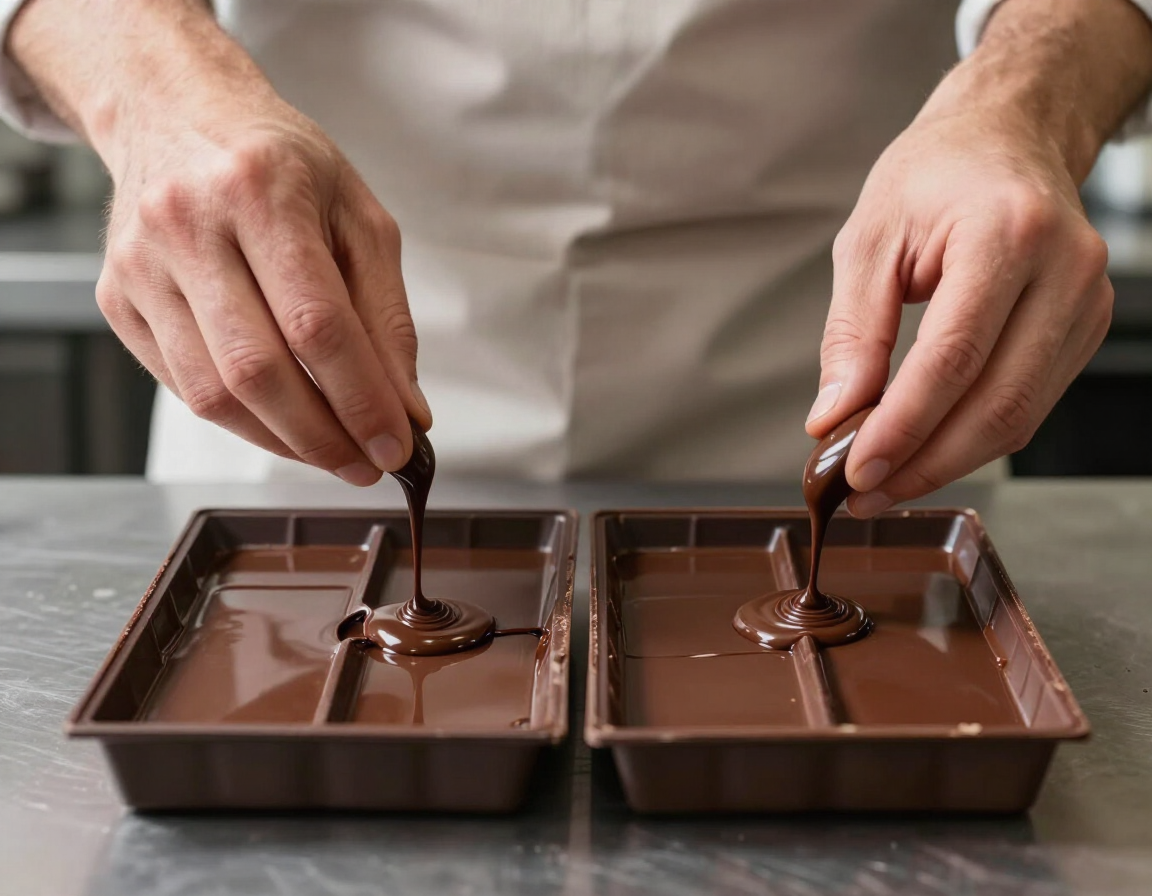
The tempered chocolate is poured into bar moulds and allowed to set. As it cools, the chocolate contracts slightly - a consequence of the correct crystalline structure forming - which allows the bar to release cleanly from the mould without force. The result is a bar with crisp edges and a surface that reflects the quality of the temper.
8. Wrapping and Presenting
Presentation is important to Chokoholic, and the finished bars are wrapped and labelled with care as part of the overall handmade product. The wrapping is the first thing a recipient sees, and it iss treated as an extension of the bar itself - not an afterthought. Each wrapped bar is a complete thing: the product of a process begun from scratch, finished to a standard that reflects the work behind it.
Flavour, Origin and the Art of the Roast
The flavour of a bean-to-bar chocolate is shaped long before the bar reaches the mould. The cocoa bean carries its own natural character - fruity, floral, earthy, nutty - and the chocolate maker's task is to understand that character and coax it into the finished product. Origin is one factor; the choices made during production are another.
Roasting level interacts directly with bean character. A shorter, lighter roast may preserve brighter, more acidic notes - the fruit and floral qualities that sit closer to the surface of the raw bean. A longer, darker roast can deepen bitterness and bring out richer, more developed flavour, reducing some of that acidity in the process. There is no single correct answer; the skill lies in finding the balance that suits the particular bean.
Small differences in process - a few degrees of temperature, a few minutes of roasting, the duration of refining - can produce meaningfully different results in the finished bar. This sensitivity to small decisions is what makes small-batch bean-to-bar production genuinely interesting, and it is why each batch from Chokoholic had its own character. The bar was not just the recipe; it was the sum of every choice made along the way.
Small-Batch, Every Batch
Chokoholic's bean-to-bar chocolate is produced in small quantities - deliberately so. Small-batch production means that every stage can be watched, adjusted and refined without the compromises that come with scaling up. The tradeoff is time; the reward is control. There is no automated system to defer to, no large-scale process to trust; each batch is the direct result of the attention paid to it.
Patience is central to how this work is done. Refining chocolate cannot be rushed - the grinding process develops smoothness and flavour over time, and cutting it short shows in the finished bar. Tempering requires careful attention to temperature and timing, not guesswork. The willingness to repeat, adjust and experiment is not incidental to Chokoholic's approach; it is the approach. Not every batch os identical, and that variation is understood as part of the craft rather than a flaw.
Learning through doing, iterating batch by batch, is how the bean-to-bar process has been developed at Chokoholic. Jamie Wake's approach as a self-taught artisan chocolate maker means there is no fixed syllabus to follow - only the feedback of the chocolate itself, and the willingness to keep refining.
Bean-to-Bar Creations
Chokoholic's bean-to-bar bars are the product of a process begun from scratch - from bean to finished wrapper. The images below document finished bars, cocoa ingredients, in-process stages and wrapped products.
The Grinder
Pouring the Mould
The Snap
Wrapped and Labelled
The Full Process
Explore More of Chokoholic's Work
Bean-to-bar is one side of Chokoholic's work. The business also creats handmade couverture products - truffles, bonbons, filled chocolates, Easter eggs and bespoke commissions - and the full story of Chokoholic and Jamie Wake is told on the Our Story page.